Why healthcare needs 24/7 incident response
Around-the-clock incident response has become a necessity for every organization that builds, hosts, or integrates healthcare applications.
—
The healthcare industry never stops. From EHR data syncing overnight to patients using telehealth apps on weekends, downtime isn’t an option. And most cyber threats strike outside normal business hours, when internal IT and DevSecOps teams are running lean.
When systems handle protected health information (PHI), the stakes are even higher. A single missed alert or delayed response can ripple into a breach, compliance violation, or interruption in patient care. Around-the-clock incident response has become a necessity for every organization that builds, hosts, or integrates healthcare applications.
Why healthcare can’t afford downtime
You know that every second of downtime in healthcare can cost more than money. It costs access, data, trust, reputation, and health outcomes. Outages that disrupt patient portals, EHR integrations, or scheduling systems erode confidence and delay care. For SaaS providers, availability directly affects customer retention and contract renewals.
From a compliance standpoint, any incident involving PHI has to be investigated and documented. When systems are offline, organizations risk losing logs, missing forensic data, or failing to meet HIPAA’s breach notification timelines. Rapid response isn’t just an IT goal—it’s a compliance requirement.
The evolving threat landscape in healthcare tech
Healthcare is now one of the most targeted industries for cyber attacks. Ransomware groups and data brokers see patient data as a high-value asset, because medical records can sell for up to 10 times more than credit card numbers on the black market.
Meanwhile, healthcare tech stacks have become more complex. APIs, IoT medical devices, cloud-native architectures, and third-party integrations all expand the attack surface. The more interconnected these systems become, the greater the risk that one small vulnerability cascades into a major event.
Key elements of effective incident response
In healthcare, incident response means more than running playbooks. It requires coordination across infrastructure, compliance, and business teams.
- Detection and alerting: Automated monitoring tools catch anomalies in traffic or behavior, but human review ensures accuracy and context.
- Containment: Isolating affected systems quickly prevents data exfiltration, corruption, data loss, or lateral movement.
- Remediation and recovery: Restoring full operations while preserving data integrity and maintaining audit trails.
- Post-incident analysis: Evaluating root causes and response effectiveness to improve both prevention and speed next time.
Each of these elements depends on infrastructure that’s continuously monitored and immediately actionable. Without that, even the most mature response plan falls short.
Why 24/7 coverage makes all the difference
Cyber incidents and system failures don’t respect business hours. Attackers often time intrusions for evenings, weekends, or holidays, knowing response teams may be slower. Even hardware issues or traffic spikes can occur without warning, and any delay in containment multiplies the impact.
Global healthcare platforms and SaaS tools also serve users across time zones. That means outages at midnight in one region can affect clinicians or patients starting their day in another. Continuous monitoring and response ensure service continuity, limit data exposure, and protect the brand’s reputation worldwide.
How 24/7 incident response supports HIPAA compliance
Under HIPAA’s Security Rule, organizations must maintain administrative, physical, and technical safeguards to ensure the confidentiality, integrity, and availability of ePHI. Continuous monitoring and immediate containment directly support these requirements.
Real-time response reduces the likelihood of data loss, unauthorized access, or delayed reporting. A structured, always-on incident response process helps maintain audit trails and demonstrate compliance during investigations or risk assessments.
Why 24/7 incident response needs 24/7 support from your hosting provider
Even the most capable security team can only move as fast as its infrastructure allows. Many healthcare “incidents” start with hosting-related failures—hardware faults, DDoS attacks, misconfigurations, or bandwidth overloads—or a vulnerability exposed by an outdated system, plugin, or application.
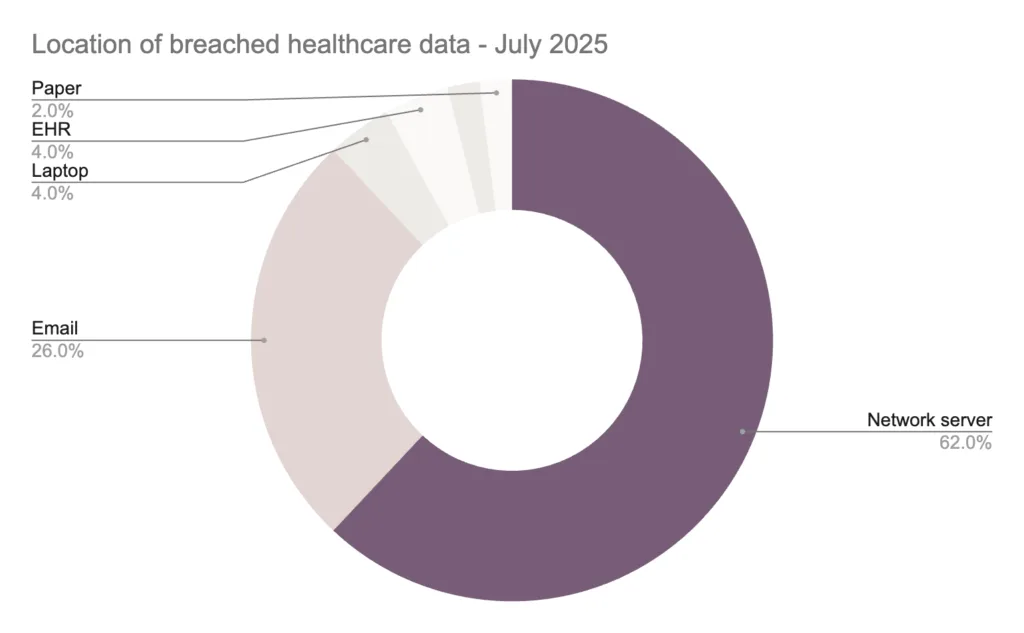
In fact, network servers are often the most common location of breached protected health information.
Without immediate support at the hosting layer, internal teams are left waiting on ticket queues while downtime drags on.
A hosting provider with 24/7 live support bridges that gap. Engineers familiar with the environment can act within minutes to isolate systems, restore backups, or reroute traffic. This collaboration turns incident response into a coordinated effort across both your internal and external teams.
(Additionally, a hosting provider that offers fully managed services with an eye to security can help prevent incidents by keeping systems and software up to date for you.)
For healthcare organizations and SaaS providers, that means faster recovery, fewer service interruptions, and confidence that every layer—from the app stack to the physical server—is protected at all times.
Getting started with 24/7 incident response in healthcare
Around-the-clock incident response is a baseline expectation for secure, compliant healthcare operations. When evaluating hosting and security partners, look beyond uptime SLAs. Ask how incidents are escalated, who responds after hours, and how quickly issues are resolved.
Choosing a HIPAA-compliant hosting provider with live, 24/7 support ensures your team isn’t left in the dark when something goes wrong. It creates a true partnership built on reliability, accountability, and shared responsibility for patient data security.
And that’s where Nexcess comes in. We offer the widest range of compliance-ready hosting solutions, with 24/7 support, seamless scalability, unbeatable speeds, and more.

Table of contents
- Why healthcare can’t afford downtime
- The evolving threat landscape in healthcare tech
- Key elements of effective incident response
- Why 24/7 coverage makes all the difference
- How 24/7 incident response supports HIPAA compliance
- Why 24/7 incident response needs 24/7 support from your hosting provider
- Getting started with 24/7 incident response in healthcare
Get hosting news and tips straight to your inbox
Join our community today.
Essential Hosting Resources to help your business stay ahead
Share this page