


Key Results
- Bilingual platform with English and Spanish built as parallel first-class experiences, not a translated toggle
- Content architecture organized around the international patient decision journey, not the org structure
- WCAG 2.1 AA accessibility compliance built into the platform from launch
- Platform migration completed with information architecture rebuilt around the patient journey
- Internal team manages content updates without developer dependency
If This Sounds Like You
You’re serving patients who arrive at your website with real stakes. They’re not browsing casually: they’re evaluating whether to trust you with something important, often before they’ve spoken to a single person at your organization. The website has to do the work of building that trust, answering the questions that would otherwise go unasked, and moving them toward a decision with enough confidence to take the next step.
That’s exactly where CODET Vision Institute was.
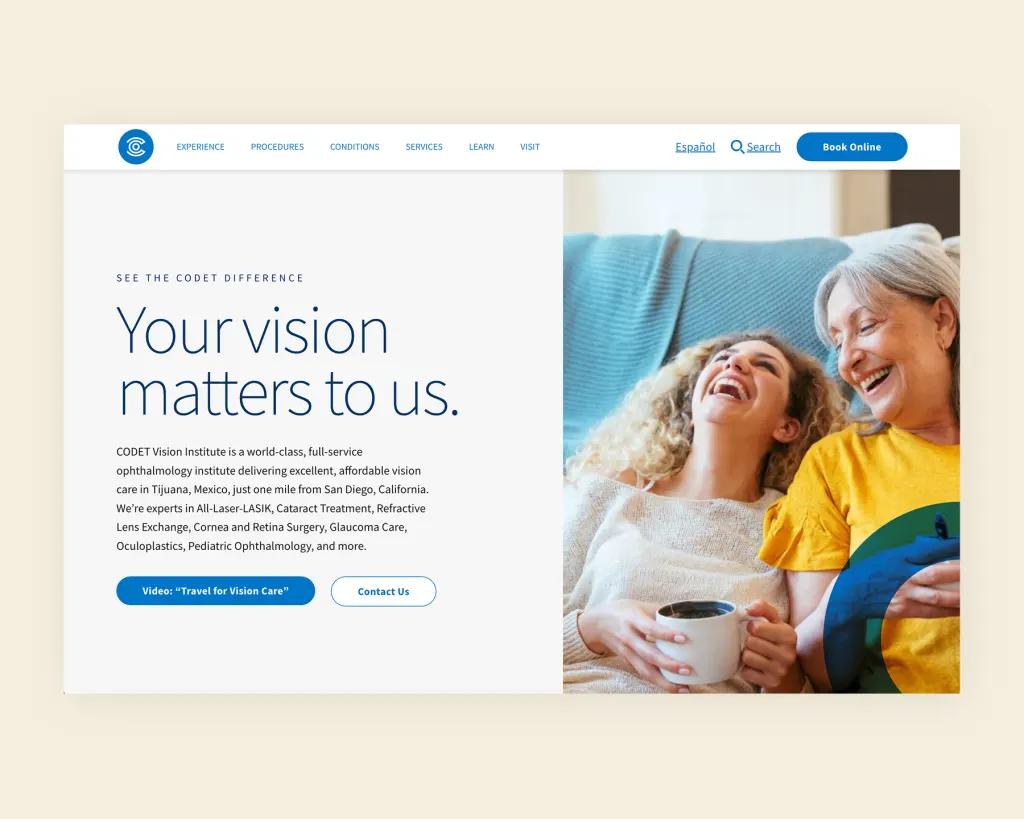
The Situation
CODET Vision Institute is a leading ophthalmology center in Tijuana, Mexico, offering LASIK and laser eye surgery to patients from across North America. Medical tourism is their business model, which means the website has to do more than inform. It has to build enough trust to move a patient toward cross-border surgery, often before they’ve spoken to anyone from the organization.
What We Did
We started with the patient decision journey: mapping the questions a prospective medical tourism patient has and what it takes to resolve each one before they’ll take the next step. That framework organized the entire content strategy. It’s a different starting point than most site rebuilds, which start with the organization’s structure. Starting with the patient’s questions meant the site was built to answer them in the right order.
CODET’s growth depends on extending reach with international patients. The platform supports that expansion: through new content programs, additional languages, or new clinical offerings, the architecture is built to absorb it.
What This Means for You
If your patients, clients, or customers are making a high-stakes decision before they ever speak to anyone at your organization, the website isn’t a marketing asset. It’s your best salesperson, running 24 hours a day, in every market you serve.
The question is whether it’s answering the questions your audience is asking, in the order they’re asking them. Most sites aren’t. They answer the questions the organization wants to answer, organized the way the organization thinks about itself.
Closing that gap doesn’t require a complete reinvention. It requires starting with the right question: what does someone need to know, and feel, before they’re ready to take the next step?
If you’re not sure your site is doing that work, that’s the conversation worth having.
We work with healthcare providers, medical tourism organizations, and international patient platforms on exactly these problems: content architecture built around the patient journey, genuine multilingual experiences, and platforms that build trust before the first conversation.


